Rescuers Discover Dog Who Appeared Turned to Stone, Then Reveal His Sweet Face
When Poleng was abandoned on the streets of Indonesia, he was desperate for someone to help him. The busy pathways of the local neighborhoods stretched out around him in every direction, filled with the everyday movement of people going about their routines, the sounds of distant traffic, and the heat of the tropical sun pressing down during the daylight hours. In those early days of wandering, Poleng searched for any source of comfort or safety, moving slowly from one area to another as he tried to find a place where he might receive care. His search eventually led him into a community where residents lived close to one another and shared a sense of daily connection. There, a kind family noticed him and began to offer food along with basic attention. They made space for him near their home, provided regular meals, and watched over him as best they could within the limits of their own resources and surroundings.
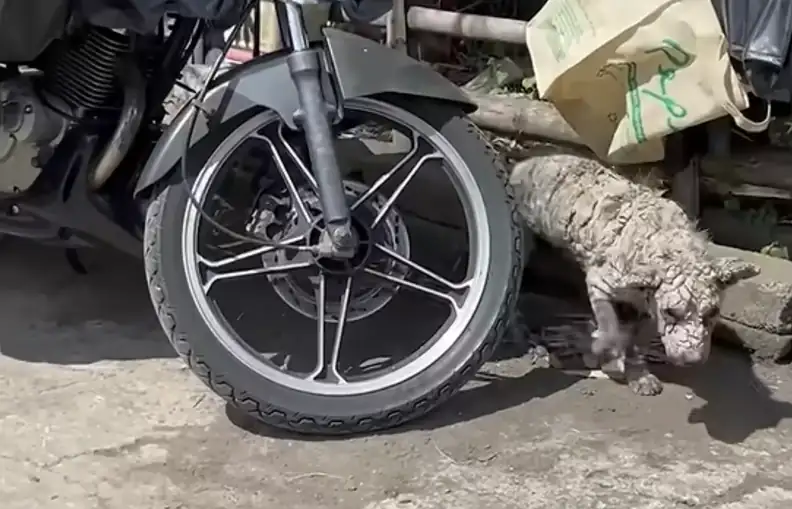
The family continued their efforts day after day, ensuring that Poleng received nourishment and a measure of protection from the open streets. They observed his condition carefully during these interactions, noting the way he moved and rested, and they recognized that the level of support he required extended beyond what their household could fully manage on its own. Their care remained steady and gentle throughout this period, focused on keeping him fed and as comfortable as possible while they considered further options for his well-being.
Around the same time, a team member from Little Steps Matter was in the vicinity assisting another dog. The family approached this team member directly and shared the details of Poleng’s situation, requesting assistance for him. The request brought the entire rescue team into contact with Poleng, and upon seeing him they registered the full extent of his appearance. The moment the team took in the details of his condition, the severity became immediately apparent. Little Steps Matter later shared their observations through an Instagram post that included the following description: “The moment we saw Poleng, it was clear he had suffered tremendously.” The same post continued with further detail: “His body was ravaged by severe mange, with painfully inflamed skin and thick crusted layers covering him so heavily it almost looked as though he had turned to stone.”
The team members had encountered many cases of mange in their work, yet the presentation on Poleng stood out for its intensity and coverage. They arranged for his immediate transport to a veterinary clinic so that intensive care could begin without delay. At the clinic the veterinary staff initiated a thorough examination and started a course of treatments aimed at addressing the mange, calming the inflammation, and supporting the recovery of the skin layers. Medications, cleansing protocols, and careful monitoring formed the foundation of the early care plan. The veterinary environment provided a controlled setting where Poleng could rest, receive consistent attention, and begin the process of physical restoration under professional guidance.
During the first days at the clinic the focus remained on stabilizing his condition and allowing the initial stages of healing to take hold. The thick crusted material that had covered so much of his body gradually began to loosen and separate as the treatments took effect. Staff members handled him with steady patience, adjusting the care routines according to his responses and ensuring that each step supported further progress. Nutrition remained an important element as well, with balanced meals provided to rebuild strength and energy over time.
In the span of two weeks the visible changes in Poleng’s appearance became pronounced. The layers that had once dominated his skin continued to fall away, revealing areas of new growth underneath. The inflamed regions showed clear signs of calming, and the overall texture of his coat started to shift toward a healthier state. Sabine Kaufmann, founder of Little Steps Matter, later described one particular development during this phase: “After all the scraps had fallen off and his skin was healing, he allowed us to touch him.” This moment marked a shift in how Poleng responded to human contact. Where earlier interactions had been limited by the discomfort of his skin, he now began to lean into gentle touch and accept the presence of the people around him.
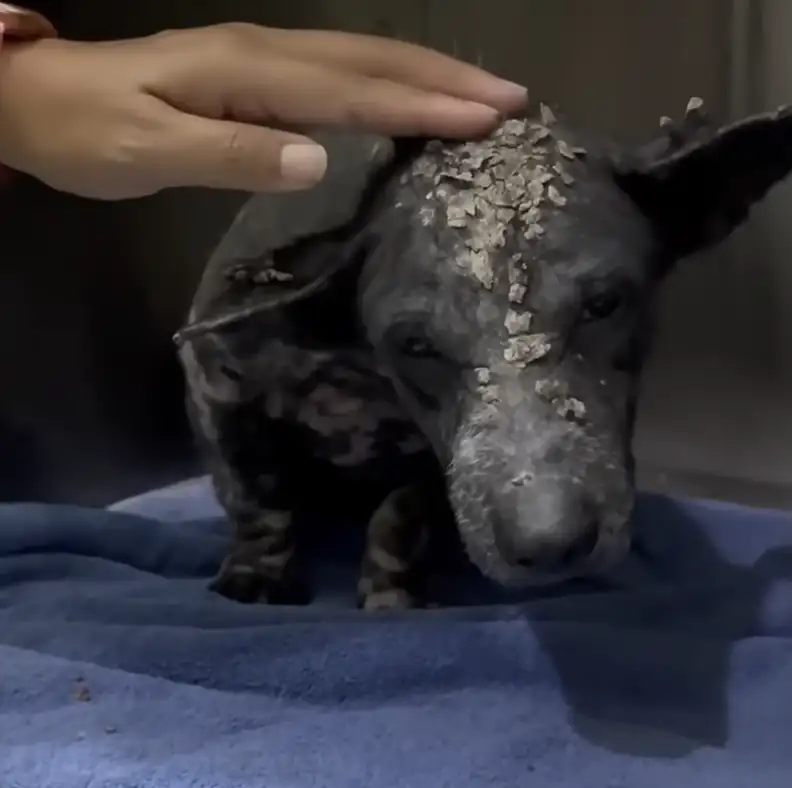
As the healing advanced further, Poleng started to welcome the full range of affectionate gestures that had previously been difficult for him to receive. Cuddles, soft strokes along his back and sides, and quiet moments of companionship became part of his daily experience. The team members observed how these interactions grew more frequent and how Poleng himself initiated closer contact at times. His personality emerged more fully during this stage, revealing a consistent warmth and an eagerness for connection. The transformation into a dog who offered steady affection and gentle responses unfolded steadily alongside the physical improvements.
Once Poleng had made significant progress in both his skin recovery and his overall comfort, the rescue team arranged for him to return to the family that had first offered him food and shelter. The family received him back into their care with the same kindness they had shown earlier, continuing to provide meals and a familiar environment while his healing continued. Over the following period it became clear that long-term arrangements would need to take a different form, as the family found themselves unable to maintain permanent care. The rescue team therefore began the process of locating a suitable foster placement that could support the next phase of his recovery.
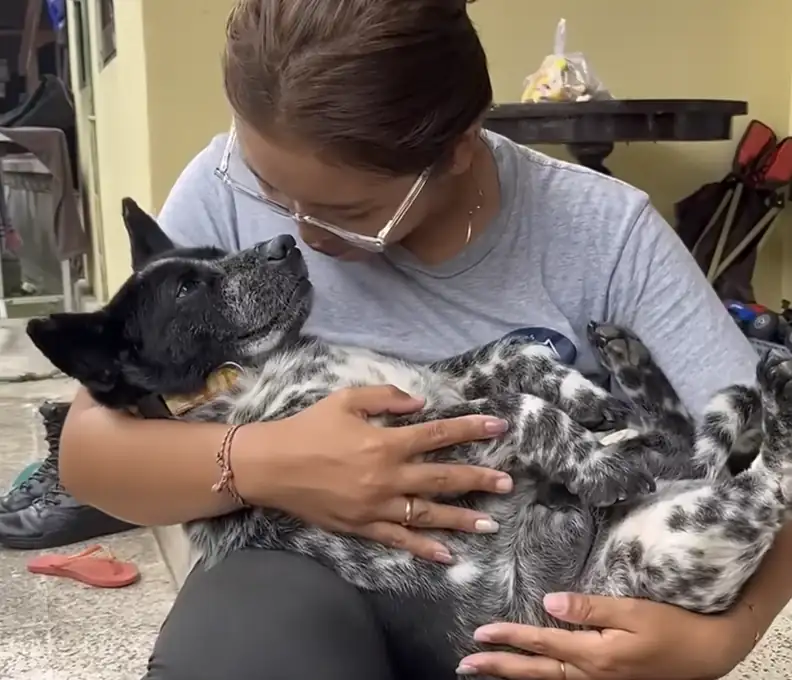
A foster home was identified and prepared for Poleng’s arrival. In this new setting he continued to receive consistent medical follow-up, balanced nutrition, and daily opportunities for rest and gentle activity. The foster caregivers maintained a calm routine that allowed his skin to finish healing and his strength to increase. Poleng adapted to the household rhythms, exploring the available spaces at his own pace and forming quiet bonds with the people who looked after him each day. The weeks in foster care became a time of steady improvement, with his coat filling in more completely and his movements growing freer and more confident.
Four months after the initial rescue, a permanent family entered the picture. This family had followed Poleng’s progress through the social media pages maintained by Little Steps Matter. They had watched the updates that documented his arrival, the early veterinary care, the gradual changes in his appearance, and the growth of his affectionate nature. Through these shared accounts they developed a strong sense of connection to his story and decided they wanted to offer him a lasting home. Arrangements were made for introductions and for the careful transition from foster care into their household.
The new family prepared their home with attention to Poleng’s needs, creating spaces where he could rest comfortably and feel secure. From the first days together they provided consistent affection, regular outdoor time, and the kind of daily companionship that matched the loving character he had shown during his recovery. Sabine Kaufmann later reflected on the outcome of this placement with the following words: “He’s living a dream life with his family now. They adore him so much. He was really the worst case we ever saw. And then he turned out to be the most goofy, funny, sweetest boy.”
In the months that followed the adoption, Poleng settled fully into the patterns of family life. Morning routines included quiet moments of greeting and shared time outdoors. Meals arrived at regular intervals, prepared with care for his ongoing health. Afternoons often held opportunities for play or relaxed exploration of the yard and nearby paths. Evenings brought extended periods of closeness, with Poleng seeking out the company of his family members and receiving the soft attention he now welcomed without hesitation. His goofy expressions and playful movements became familiar features of the household, bringing lightness to ordinary days.
The family continued to monitor his skin and overall condition, maintaining the supportive habits that had carried him through the earlier stages of healing. Veterinary check-ups remained part of the schedule as needed, confirming that the progress achieved during the rescue and foster periods held steady. Poleng’s days filled with the simple pleasures of a secure environment: the sound of familiar voices, the texture of soft bedding, the freedom to move without the weight of earlier discomfort, and the steady presence of people who valued his company.
Throughout this chapter of his life the original community that first offered him food and shelter remained connected in spirit through the knowledge that his path had led to lasting care. The Little Steps Matter team kept occasional contact, receiving updates that showed Poleng thriving in his permanent home. The combination of early kindness from the neighborhood family, the intensive veterinary intervention, the patient foster period, and the final placement with a devoted household created a continuous thread of support that carried him from the streets into a life of comfort and affection.
Poleng’s presence in his forever home continues to reflect the full arc of his recovery. The once-severe condition of his skin has given way to a healthy coat that responds well to regular grooming and outdoor activity. His interactions with family members remain marked by openness and warmth, with frequent invitations for cuddles and shared quiet moments. The goofy and funny side of his personality surfaces in the small daily choices he makes, whether choosing a particular resting spot, responding to familiar sounds with bright attention, or engaging in light play that draws smiles from those around him.
The story of Poleng stands as a record of steady care offered at each stage. From the first meals provided by the kind family in the Indonesian community, through the decisive action of the Little Steps Matter team and the veterinary staff, into the supportive weeks of foster care, and finally into the permanent household that had followed his journey online, every step contributed to the life he now enjoys. The family that adopted him continues to express their affection through consistent daily attention, ensuring that the dream life described by Sabine Kaufmann remains his ongoing reality. In this setting Poleng moves through his days with the freedom and comfort that once seemed distant, surrounded by people who recognize and cherish the sweetest qualities that emerged as his recovery advanced.