A Quiet Family Portrait from 1872 Concealed a Detail Overlooked for Generations
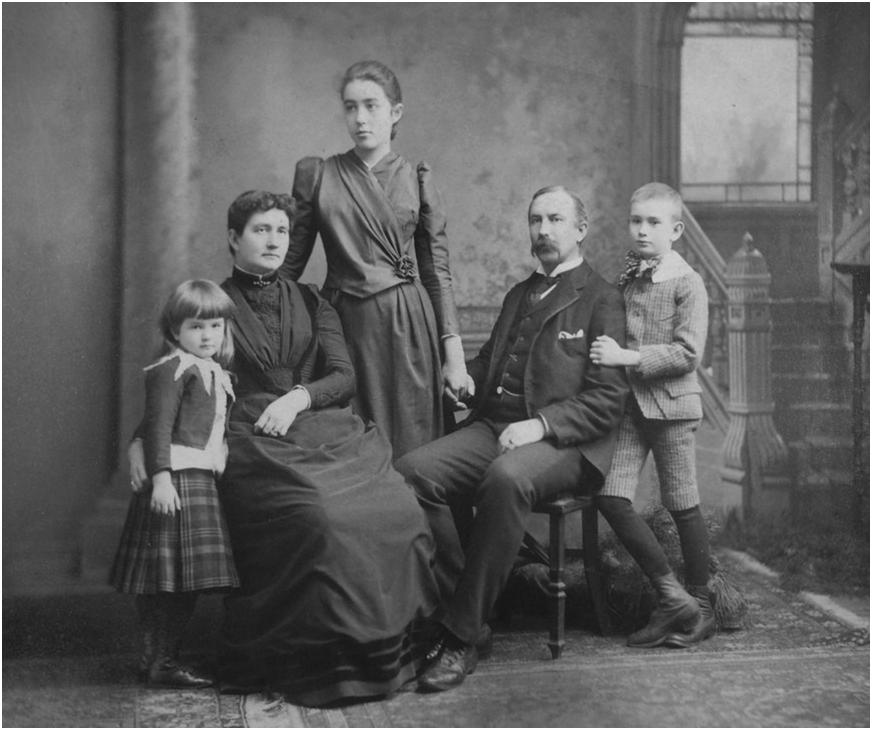
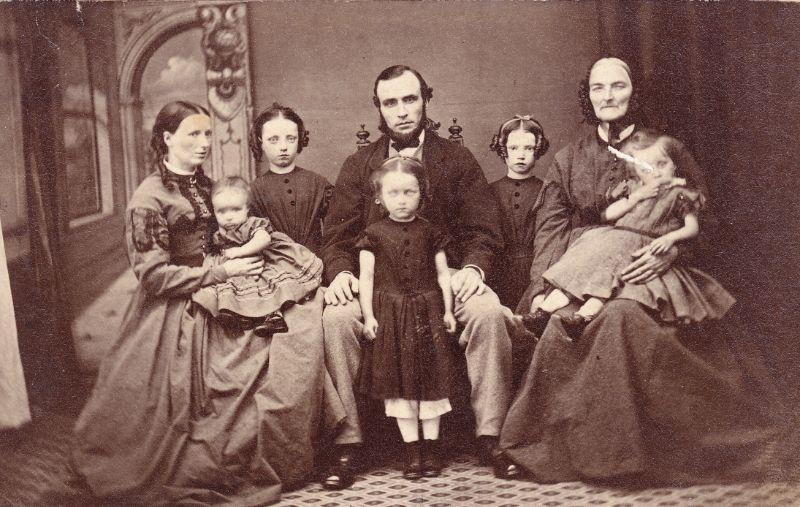
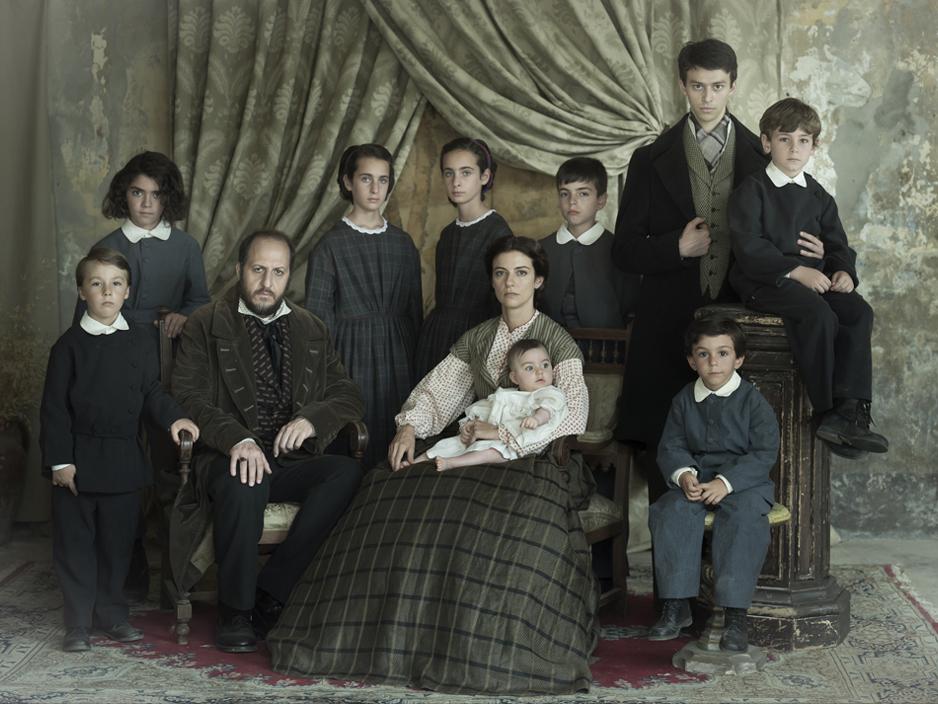
At first glance, it looks like nothing more than a traditional family portrait from the late 19th century.
The black-and-white photograph shows a mother seated in the center, surrounded by three children.
Everyone appears serious, motionless, and perfectly posed, in the manner families often did during the Victorian era.
More than 150 years after the picture was taken, one tiny detail continues to capture the attention of viewers around the world.
The photograph, reportedly dating back to 1872, resurfaced online and quickly became the focus of intense discussion.
Thousands of people zoomed in on a particular section of the image after noticing something unusual near the hand of the older daughter standing beside her mother.
Many observers believed they had discovered evidence of a mysterious figure hidden within the photograph.
Others suggested the image might reveal an early example of photographic manipulation.
Some even proposed paranormal explanations.
The closer people looked, the more questions seemed to emerge.
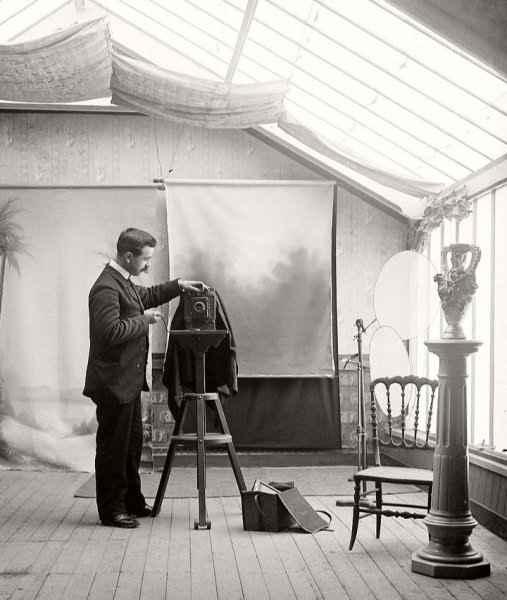
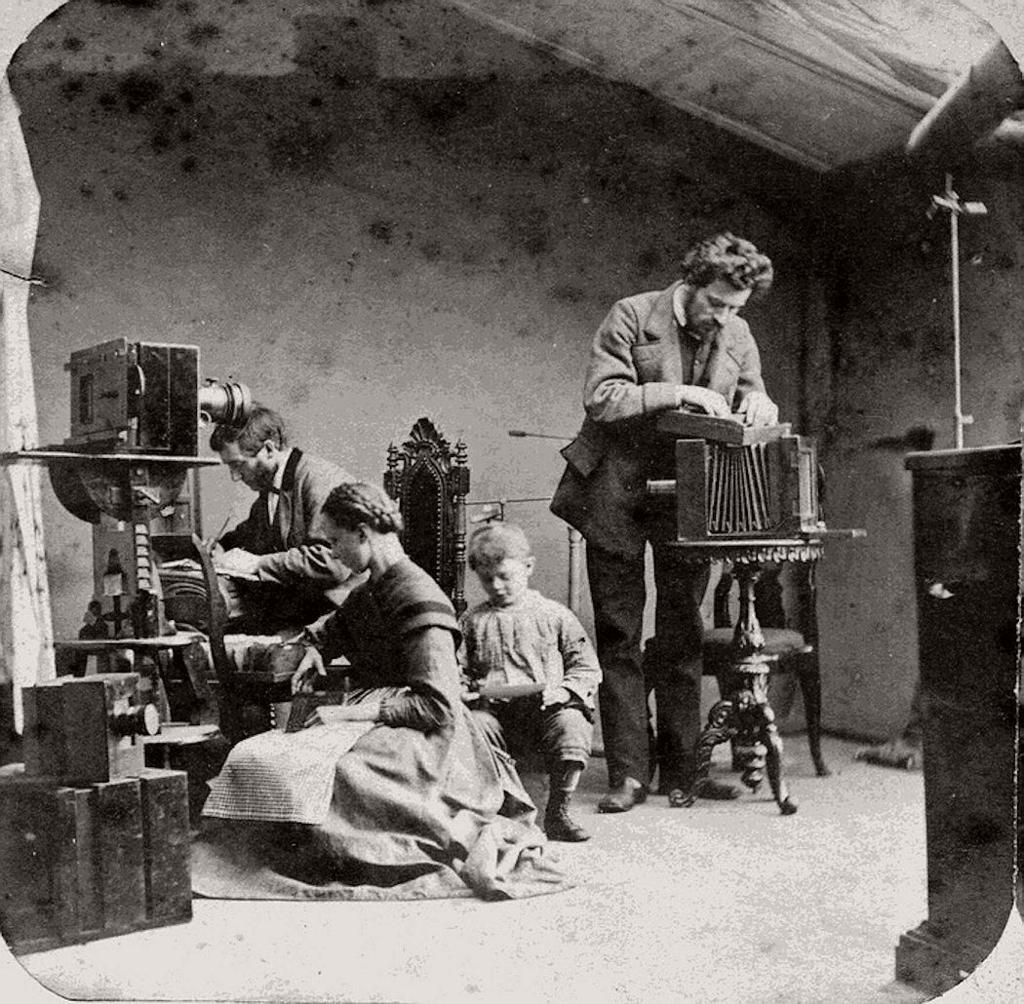
Victorian photography was very different from the digital photography we know today.
Cameras required long exposure times, and subjects often had to remain completely still for several seconds.
Because of these technical limitations, photographers frequently used supports, hidden stands, and creative positioning techniques to keep their subjects from moving.
As a result, strange visual effects occasionally appeared in photographs from the era.
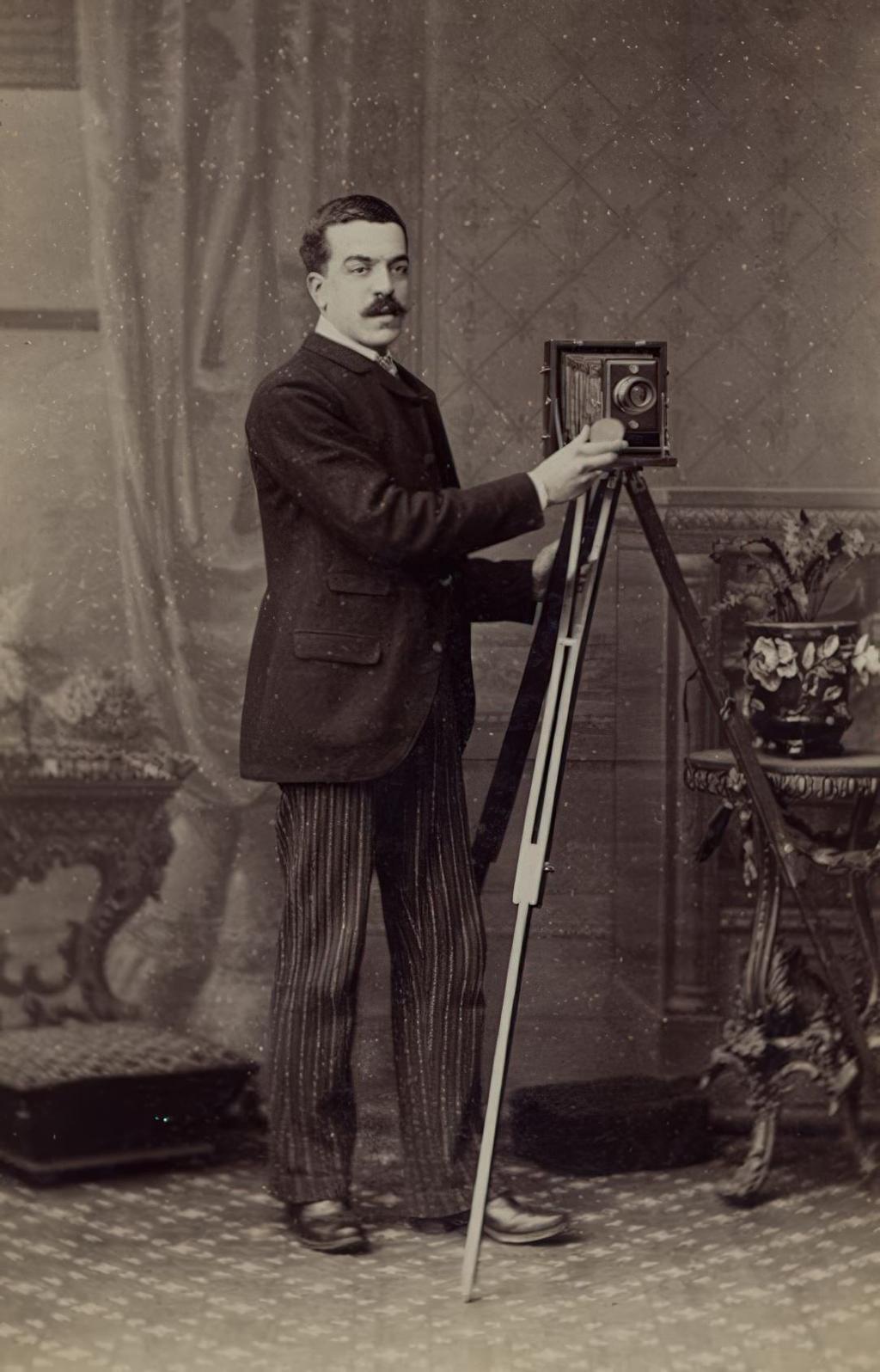
When modern viewers examine old photographs through a contemporary lens, they often notice details that seem unusual or unsettling.
Blurred faces, oddly positioned limbs, and partially visible objects can create optical illusions that appear mysterious at first glance.
Experts who have studied historical photography point out that many so-called “ghost photographs” from the Victorian era can be explained by double exposures, movement during long exposures, or simple photographic artifacts.
In the case of this particular family portrait, attention focuses on what appears to be an extra hand or an oddly positioned set of fingers near the girl’s dress.
Depending on how the image is viewed, the shape can seem almost detached from the surrounding figures.
This ambiguity has fueled countless theories online.
Some viewers argue that the hand belongs to the seated mother and merely appears distorted because of the angle and lighting.
Others believe it may be part of the daughter’s own hand, partially hidden by folds in the fabric.
A few enthusiasts insist there is still no completely satisfactory explanation.
What makes the image especially fascinating is the way human perception works.
Our brains constantly search for patterns and familiar shapes.
When an image contains incomplete visual information, the mind naturally attempts to fill in the gaps.
This psychological tendency often turns ordinary details into extraordinary puzzles.
More than a century after the photograph was taken, it continues to demonstrate the enduring power of old images.
A single unexplained detail can transform a forgotten family portrait into a global conversation.
Whether the mysterious hand is simply an illusion created by Victorian photography techniques or something more unusual, the photograph remains a remarkable example of how historical images can capture the imagination of future generations.
In the end, the greatest mystery may not be the hand itself.
It may be the fact that a family who posed for an ordinary portrait in 1872 could never have imagined that people around the world would still be studying their photograph more than 150 years later, searching for answers hidden in a single frozen moment of time.
The portrait itself invites repeated examination.
The mother’s formal posture anchors the composition at the center of the frame.
The three children stand or sit in carefully arranged positions that reflect the formal conventions of studio photography at the time.
Clothing details, such as the texture of dresses and the arrangement of hair, become visible under close inspection and add layers of historical information.
The unusual shape near the older daughter’s hand stands out against the darker tones of fabric and background.
Viewers enlarge the section repeatedly, tracing the outline of what resembles fingers or a partial limb.
Online discussions expand as individuals share cropped versions of the image and invite others to offer interpretations.
Historical photography specialists note that long exposure times made any slight movement capable of producing ghostly or duplicated forms.
Supports placed behind subjects to maintain stillness sometimes remained partially visible or created unexpected shadows.
Double exposure techniques, used intentionally or accidentally, could layer one image upon another and produce the appearance of additional limbs or figures.
In this portrait the ambiguous form near the girl’s dress continues to invite multiple readings.
One interpretation places the shape as an extension of the mother’s hand, altered by perspective and the fall of light across the folds of clothing.
Another reading identifies the form as belonging to the daughter herself, with fabric and angle combining to create a sense of separation.
A third group of observers maintains that the detail resists full explanation and therefore sustains ongoing interest.
The human visual system contributes significantly to the continuing fascination.
Pattern recognition operates automatically, seeking recognizable structures such as hands, faces, or figures even when information remains incomplete.
Gaps in visual data prompt the brain to complete the picture according to familiar templates.
This process transforms a technical feature of nineteenth-century photography into a subject of widespread curiosity.
The photograph’s survival across more than a century and a half further amplifies its impact.
What began as a private family record has become a shared object of public scrutiny.
Each new generation of viewers approaches the image with contemporary tools for magnification and analysis.
Digital platforms allow the same section of the portrait to be examined simultaneously by thousands of people across different countries.
The resulting conversation spans technical explanations, historical context, and speculative ideas.
The original sitters, posed in a studio in 1872, created a record intended for their own time.
Their serious expressions and formal arrangement followed the conventions expected of family portraits during that period.
They could not have anticipated that one small visual element would later generate extensive discussion.
The image now functions as both a historical document and a prompt for reflection on perception itself.
It illustrates how a single frozen moment can continue to generate questions long after the people in the frame have passed from living memory.
The enduring attention paid to the portrait underscores the lasting capacity of photographic records to engage new audiences.
Through careful study of lighting, posture, fabric, and the ambiguous shape near the older daughter’s hand, viewers continue to explore the intersection of technology, history, and human observation.
The photograph remains a quiet yet powerful reminder that ordinary family moments, captured under the technical conditions of their era, can acquire unexpected significance across the passage of time.