Firefighter Endures Third-Degree Burns – See His Transformation 11 Years Later
Patrick Hardison received devastating injuries in a house fire as he attempted to rescue a woman he believed to be trapped in the blaze.
This brave man was left with third-degree burns to his entire face and scalp. For years, he wore a baseball cap, sunglasses, and prosthetic ears in public.
Patrick recalled children running away when they saw him. His life changed again in 2015 when he underwent the most extensive face transplant ever.
As per reports, Hardison had a 50/50 chance of surviving the face transplant. The surgery took 26 hours. More than 100 people worked in two teams. The procedure was a success. Today, Patrick Hardison is living life alongside his beloved wife and children.
Here’s all you need to know about his incredible story. Here’s what Patrick looks like today.
Today, we have so much knowledge about the human body. Doctors, nurses, surgeons, and all others in the field of medicine are true heroes. They do everything they can to help people get better. It’s mind-blowing what can be done to save a life these days. Surgeons can replace a heart. Surgeons can replace a kidney.
Patrick Hardison – face transplant
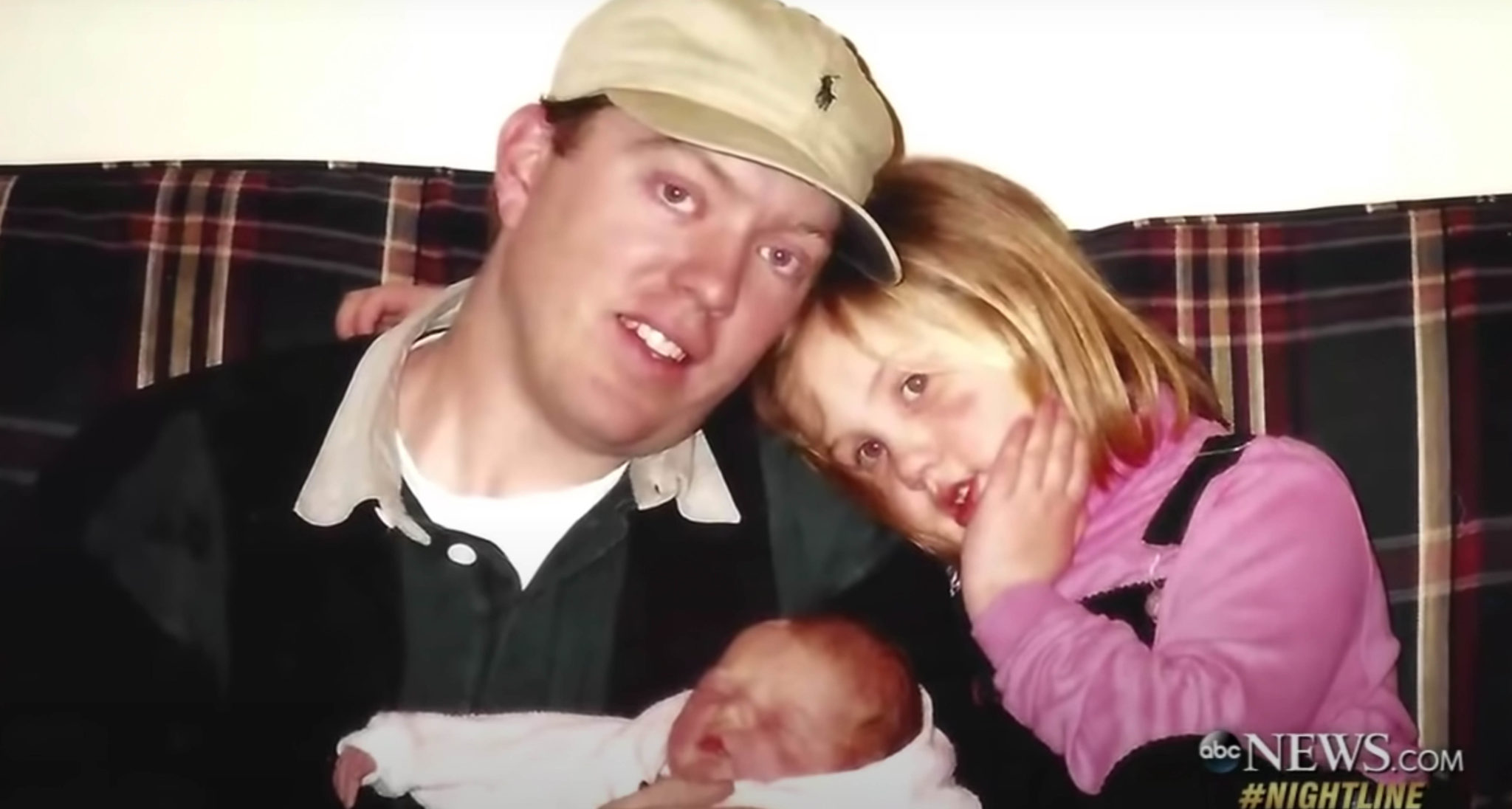
With the knowledge experts have today, it’s even possible to completely transform a person’s face for those in need. Face transplants have been performed since 2005. Isabelle Dinoire became the first-ever person to receive one. In 2015, another very special face transplant was performed in the US. Patrick Hardison became the first American to undergo the procedure.
Like any other loving father, Patrick attended his children’s sporting activities. He liked spending time with his family. The volunteer fireman always endeavored to help his community in any way he could.
One day in 2001, the lives of he and his family would change forever.
Patrick was called out to a house fire. He sustained extensive facial burns to his upper torso, head, and neck. The blaze also claimed his ears. It claimed his lips. It claimed most of his eyelid tissue. It claimed most of his nose.
It seemed as though he was destined to face a life of children running away from him. Other parents whispered and pointed. In 2015, the most extensive face transplant ever performed became a reality.
Patrick had only a 50/50 chance of surviving the procedure. Such was its complexity. Today, he has an entirely new face. He looks nothing short of incredible. Here’s all you need to know about the mind-blowing story of Patrick Hardison.
Patrick Hardison from Mississippi worked as a volunteer firefighter earlier on in his life. In 2001, he responded to a house fire. A horrible accident occurred.
Disfiguring injuries in a house fire
Hardison was inside a burning home when it collapsed on top of him.
“[My mask] was melting to my face,” Hardison said. “My hose [was] already melted.”
He managed to escape through a window. His head and upper body were already on fire. Patrick suffered horrific injuries.
“For somebody who does what we do for a living, I’ve never seen anybody burned that bad that was still alive,” friend and first responder Jimmy Neal recalled of seeing Hardison after the accident.
The father had third-degree burns on his entire face and scalp. In addition, he sustained facial burns to his head, neck, and upper torso. The fire also claimed his ears. It claimed his lips. It claimed most of his nose. It claimed even most of his eyelid tissue.
“I didn’t actually see myself until probably November. I got injured in September,” Hardison told Fox News. “They had cut a little pinhole in one of my eyelids because they had everything covered, skin graft. I looked in the mirror and all I could do, I said, ‘this is it? I can’t do this,’” he recalled.
A new life awaited Hardison. He underwent 71 surgeries and several other procedures. He was still unable to form normal facial expressions. Patrick couldn’t eat without feeling pain. He couldn’t laugh without feeling pain. He couldn’t even blink. He couldn’t close his eyes.
Surgeons eventually used flaps of skin to protect his vision. He remained at risk of slowly but surely going blind.
As the years went by, Patrick had difficulties accepting his appearance. Being with his children became a nightmare. Being by himself became a nightmare. People pointed at him. The children were scared.
Lost hope of living an ordinary life
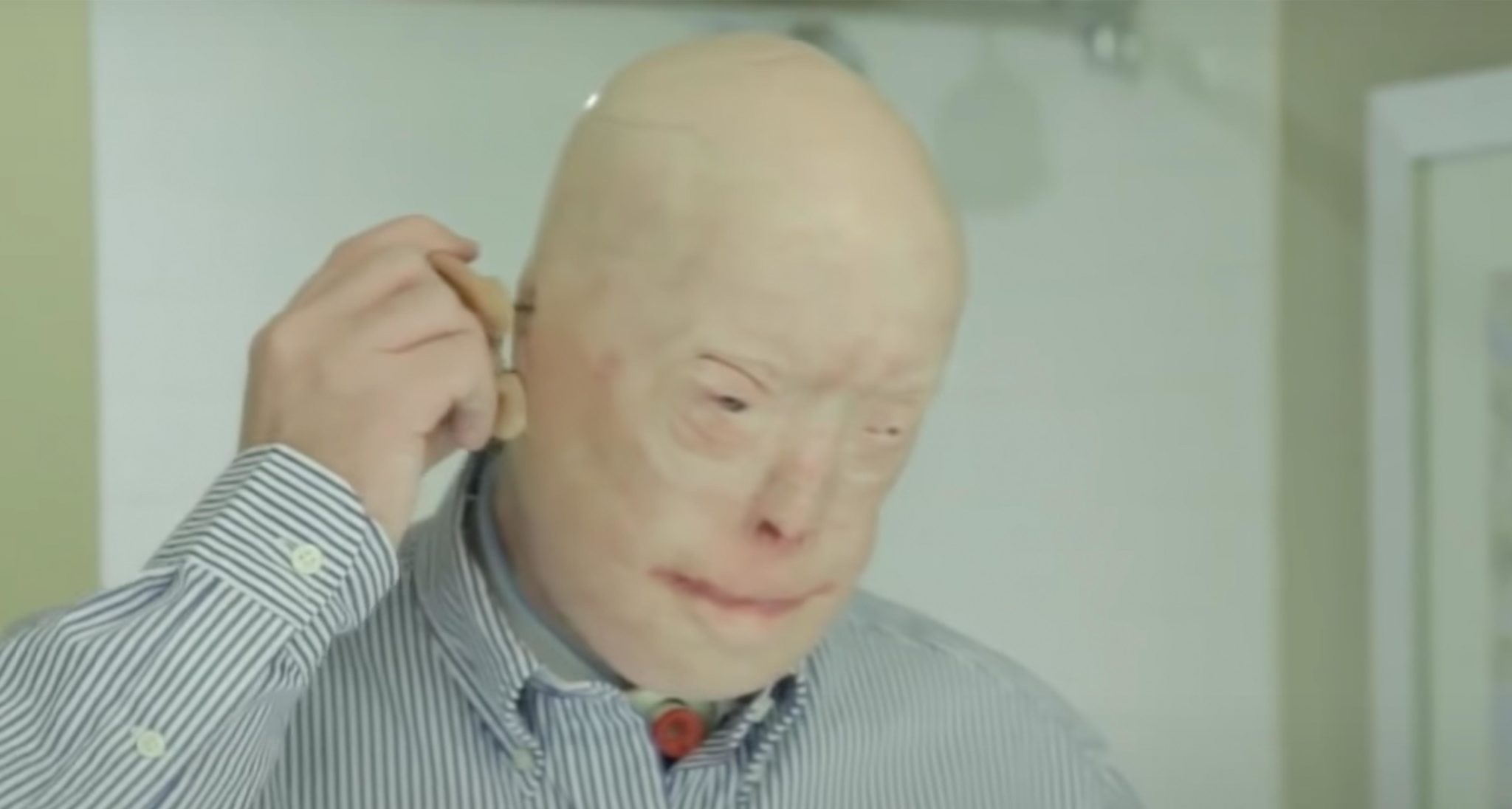
Patrick always wore a baseball cap and sunglasses. He wore specially designed prosthetics that replaced his ears.
“I had kids. It was a tough time. I never got a day off from the injury. When you walk out in public, it was daily. And, you know, it’s so — there’s no way to explain everything,” he said.
“You go to the ball field, you have to prepare yourself for the kid that goes running off screaming.”
For years, Patrick battled pain. He battled staring from people when walking down the street. He was losing all hope of living an ordinary life. He started to think that his disfigured appearance was one he would be cursed with forever.
As time went by, surgeons developed new methods for face transplants. In 2005, Isabelle Dinoire became the first-ever person to have a face transplant. Hardison had given up hope of getting the help he desperately wanted.
Then, one day, a friend stumbled across Dr. Eduardo D. Rodriguez. He worked at the NYU Langone Medical Center in New York. Rodriguez had performed a face transplant before. The search began to find a donor for Patrick.
After a year, Hardison’s search had turned up just two potential donors. The first one was a good match. The tissue profile was not.
Patrick Hardison – face donor David Rodebaugh
The second candidate looked very promising. The man’s family withdrew him from consideration.
Hardison was preparing to accept that he might never get a face transplant. Out of the blue, another potential donor emerged. LiveOnNY, a nonprofit that coordinates organ donations in the New York area, had found a match. The face belonged to David Rodebaugh. He was a 26-year-old who had sustained a massive head injury in a bike accident. He had been declared brain dead.
After David passed away, his mother, Nancy Millar, decided to donate her son’s organs. She donated his liver. She donated his heart. She donated his kidneys. More importantly, she decided to also donate his face.
“I said, ‘You better save his face. He has the face of a porcelain doll.’ And he’s a donor — we had talked about it,” Millar told People.
She didn’t hesitate for a second when she heard about Patrick and the possibility of him getting a face transplant. For her, it was a chance for David to live on.
“When I met Patrick, I saw this strength, this strong, manly, burly kind of energy in him — that David had,” she recalled.
“David wanted to be a firefighter. I knew if this guy was a firefighter — he was willing to walk into a fire to save people and risk his own life — then he had the strength that David had.”
Dr. Eduardo D. Rodriguez assembled his team of 100 doctors, nurses, and other medical aides. Together they prepared for Hardison’s surgery. It was the most extensive soft tissue face transplant ever performed. The surgery took a whopping 26 hours.
50/50 chance of surviving the surgery
The medical team gave Hardison a new face. They gave him a new scalp. They gave him new ears. They gave him new ear canals. They selected portions of bone from the chin. They selected portions from the cheeks. They selected the entire nose. Patrick also received new eyelids. These restored his ability to blink naturally.
The surgery carried risk. Due to the highly complex nature of the procedure, Patrick had only a 50/50 chance of surviving.
“Everything in life has a risk,” Hardison told Time Magazine.
“When it’s your time to go, you’ll go—whether you’re walking down the street and get hit by a car or you’re lying on the operating table.”
Prior to the surgery, Patrick met his family for what could have been the last time.
His eldest daughter Alison wondered why her father was so desperate to go through with the procedure.
“He said, ‘I won’t have to wear a ball cap and I won’t have to wear my sunglasses. I’ll look normal whenever I get to walk you down the aisle,’” Alison recalled Patrick saying.
“And that right then pretty much sealed the deal for me.”
The procedure was a big success. It was only the start of a very long journey for Patrick. During the first week following the operation, he endured late-night scares involving fluctuations in blood pressure. He endured an unstable airway.
The new face also meant that he had to learn how to speak again. He had to learn how to swallow again. He suffered from anxiety. He had bouts of frustration because of it. He couldn’t even close his mouth because his face was so swollen.
“They have given me a new life.”
Despite all that, the surgery was life-changing. Patrick experienced the joy of seeing his family again. He also met David Rodebaugh’s mother, Nancy Millar. Their first encounter after the surgery was emotional. Nancy had one request.
“I said, ‘Can I kiss your forehead?’” Millar said. “That’s the one thing I wanted to do because every night before David went to bed when he was little, I kissed his forehead.”
“I’ve been waiting a year to meet her. I’m very grateful,” Patrick said. “Without her, it wouldn’t have been possible. It’s like she’s family. We connected that easily.”
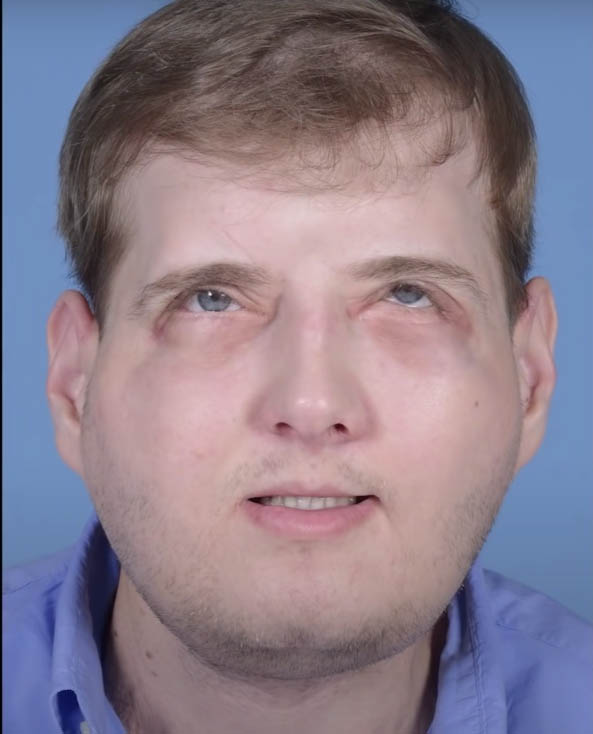
It’s now been eleven years since Patrick underwent his face transplant. Since then, his life has changed plenty. He and Chrissi divorced a year after the surgery. This followed ten years of marriage.
Hardison’s face healed nicely. The swelling has gone down. He has to take anti-rejection drugs for the rest of his life to stop his body’s immune system from fighting the inserted transplant. It has given him the chance to live again.
“I am deeply grateful to my donor and his family,” Hardison said in a statement.
“Even though I did not know who they would be, I prayed for them every day, knowing the difficult decision they would have to make in order to help me.”
“I hope they see in me the goodness of their decision. I also want to thank Dr. Rodriguez and his amazing team. They have given me more than a new face. They have given me a new life.”
Patrick Hardison today – pictures
Today, the father-of-five wants to use his journey and recovery to spread the message that it’s never too late to give up. Patrick stands for hope. He desires to help others struggling with debilitating injuries.
“I’ve bought my own place, working on getting a house built. I’m working on a book,” Hardison told Fox in 2021.
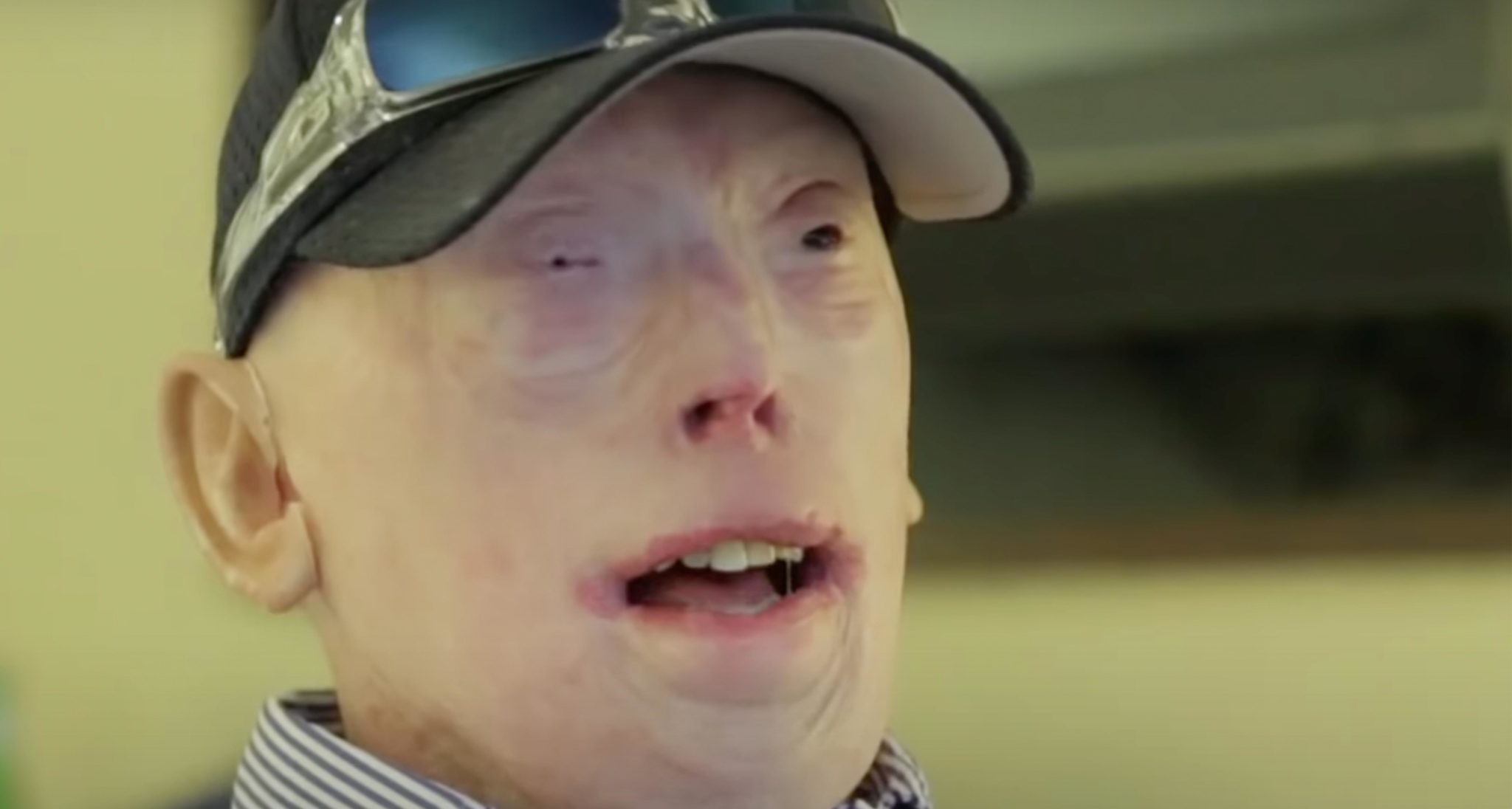
“Because I want to show the world that you can have hope. I wouldn’t want people that were like me years ago to think that’s it, I have to live like this. You don’t. You can accomplish anything.”
Patrick Hardison’s recovery is a miracle. We are incredibly inspired by surgeon Dr. Eduardo D. Rodriguez and his team. You are the real heroes.
Please share this article on Facebook with friends and family to honor the work of the medical staff who helped Patrick get his life back.
The fire that transformed Patrick’s life began as a routine call for a volunteer firefighter dedicated to protecting his Mississippi community. He entered the burning structure with the goal of locating a woman reported to be inside. The roof collapsed. Flames engulfed his protective gear. The mask melted against his skin. The hose in his hands disintegrated under the extreme heat. He forced his way through a window to reach open air. The damage had already been done.
Third-degree burns covered the full surface of his face and scalp. The heat destroyed cartilage in both ears. It removed the soft tissue of his lips. It eliminated the majority of his nose. It consumed most of the delicate tissue of his eyelids. First responders who knew him from years of shared service described the extent of the injury as beyond anything they had previously encountered in a survivor.
Recovery required repeated surgical interventions. Over the following years Patrick underwent 71 separate operations. Skin grafts covered exposed areas. Flaps of tissue were carefully positioned to shield the remaining eye structures. Each procedure brought incremental protection. None restored the ability to form expressions. None eliminated the constant physical discomfort that accompanied eating or smiling. The inability to blink left his vision permanently vulnerable.
Daily life carried continuous emotional weight. Public appearances required preparation. A baseball cap covered the scalp. Sunglasses shielded the eyes. Custom prosthetic ears completed the outward presentation. Children at sporting events sometimes fled at the sight of him. Adults whispered. The cumulative effect of these encounters eroded his sense of ordinary participation in family and community activities.
Advances in transplant medicine continued during those years. The first successful face transplant occurred in 2005 with Isabelle Dinoire in France. Techniques refined over the subsequent decade opened new possibilities. A friend of Patrick’s identified Dr. Eduardo D. Rodriguez at NYU Langone Medical Center. Rodriguez had already completed a prior face transplant. The process of locating a suitable donor began in earnest.
Matching requirements proved exacting. Tissue compatibility, blood type, and physical dimensions all needed alignment. Two potential donors appeared within the first year of searching. The first matched in several categories. The tissue profile ultimately proved unsuitable. The second candidate advanced further in evaluation. The family later withdrew consent.
Hope diminished. Acceptance of a permanent altered appearance seemed increasingly likely. LiveOnNY then identified a third possibility. David Rodebaugh, age 26, had suffered irreversible brain injury in a bicycle accident. His mother, Nancy Millar, authorized donation of multiple organs. She specifically requested that his face be included among the gifts that could help others.
Nancy described her son’s features as resembling porcelain. She recalled conversations in which David had expressed willingness to serve as a donor. Upon learning of Patrick’s background as a firefighter, she recognized a shared spirit of service. The decision to proceed felt clear to her.
Preparation for the operation involved more than one hundred medical professionals divided into coordinated teams. The procedure lasted twenty-six hours. Surgeons transferred the full soft-tissue face, the scalp, both ears, and the ear canals. They incorporated bone segments from the chin and cheeks along with the complete nose structure. New eyelids restored the protective mechanism of blinking.
Risk remained substantial. The complexity of connecting nerves, vessels, and tissues produced an estimated fifty percent chance of survival. Patrick acknowledged the uncertainty in conversations with his family. He spoke with his daughter Alison about the possibility of walking her down the aisle without the familiar cap and sunglasses. That image helped solidify her support for the decision.
The immediate postoperative period brought additional challenges. Blood pressure varied unpredictably. Airway stability required constant monitoring. Swelling prevented full closure of the mouth. Speech and swallowing demanded deliberate relearning. Anxiety and frustration accompanied the early weeks of adjustment.
Progress continued. Patrick reunited with his children. He met Nancy Millar in a moment of mutual recognition. She asked to kiss his forehead in the same manner she had once kissed David’s each night. The gesture carried deep personal meaning for both of them. Patrick expressed lasting gratitude for the decision that made his transformed appearance possible.
Eleven years have now passed since the transplant. The surgical site healed with reduced swelling. Lifelong immunosuppressive medication prevents rejection of the transplanted tissue. Patrick has spoken publicly about the renewed capacity for daily activities that once seemed unreachable. He purchased a home. He began work on a book intended to convey the message of continued possibility after severe injury.
The account of Patrick Hardison illustrates the reach of modern surgical collaboration. It demonstrates the profound impact of organ donation decisions made by grieving families. It shows the perseverance required across years of physical and emotional recovery. The volunteer firefighter who entered a burning house in 2001 emerged with a new face and a renewed ability to participate fully in the life he values with his children.